Welcome to the preschool years: early childhood education explained
Early childhood education sets the foundation for your child’s overall development and helps prepare them for formal primary education
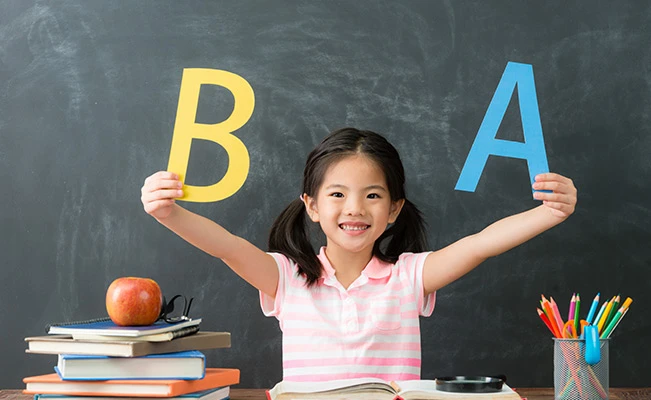
Early childhood education sets the foundation for your child’s overall development and helps prepare them for formal primary education. At ages 3-5, the “preschool period”, a child’s language, social, emotional and cognitive skills are developing at a rapid pace. Learning during this stage can come from different sources — play, reading, singing and social interactions in an early education setting or at home1. As your child’s first teacher, you need to understand what effective early childhood education entails and what key milestones to expect from your child during this incredible journey of learning.
What does quality early childhood education look like?
First let’s define what quality early childhood education is. A child’s preschool education is considered high quality when it provides the following2:
- Support for children’s development and learning: This can come in the form of activities and materials that stimulate children’s interest and imagination, encouraging children’s efforts through comments, or setting boundaries for children’s behavior.
- A properly planned and structured curriculum: The curriculum should have clearly set goals for children’s development. A good balance between activities that are guided by teachers and activities that allow children to explore and choose for themselves is also essential.
- Milestone tracking and assessment of a child’s development: Educators should note what each child says and does, collecting their drawings and writings, using screening tests to identify strengths and areas that need more support, and focusing on each child’s interests.
- A well-developed relationship with the children’s families: Open communication between the preschool and parents is an important part of early education. Each party should be clear on their goals for the child’s development, where a family’s language and culture are incorporated into the child’s learning, and where families are encouraged to join in activities.
Learning through play
One of the most effective learning strategies used in early childhood education is learning through play. It has an effect on virtually every aspect of their development, such as:
- Cognitive skills and behavior
- Physical and motor skills
- New vocabulary
- Social skills3
What makes play so effective as a learning tool for preschool children is that it allows children to explore and make sense of the world around them using their creativity and imagination1.
Tracking this development in terms of a child’s key milestones, should look something like this:
Physical/Motor Development
Children’s approach to learning is very hands-on, and as they interact with people and objects, they develop physical and motor skills1.
Outdoor play allows them to develop motor skills from running and stepping on and off stairs one-by-one3 to being able to fully swing, climb and hop5. Meanwhile, playing with building blocks and other play objects develops the dexterity they need for more complex activities such as holding and using forks and spoons properly6.
Social and Emotional Development
Through playing and interacting with you, educators and other children in preschool, your child will progress from copying behavior to more complex make-believe play and increased social activity5.
At the beginning of preschool, they may display a range of emotions, showing affection without prompting, and take turns at playing games4. From there, play can teach them behaviors such as wanting to please friends, developing independence, and understanding more complex concepts such as gender and the difference between real and make-believe6.
Guided play also allows your child to learn rules, boundaries, and discipline1.
Language & Communication
You can expect your child to make leaps and bounds when it comes to their language and communication development at this stage.
Play allows your child to name and identify colors, start counting, identify friends and follow rules at the beginning of the preschool years5.
As their imagination grows, their storytelling should improve4 5, as well as their grammar skills. And by the time your child is ready to go to primary school, they should be able to use simple sentences to tell a full story5.
Cognitive Development
Playtime activities that require problem solving and critical thinking help children develop cognitive skills.
Playing with blocks, puzzles and other toys allows them to figure out how things work and solve problems they encounter along the way4 5. It also helps them plan (“What do I want to build?”) and follow through with that plan — skills that will be valuable for them until adulthood1.
Through role-playing, they should also understand the concepts of money and time3 5 6.
How you can contribute to early childhood education
Early childhood education — especially one that uses the learn to play theory — involves bringing together different spheres of a child’s life. This is to help ensure there’s continuity and consistency across all aspects of their development.
What this means to you as a parent is that you play an important role in partnership with your child’s preschool. You should recognize a child’s interests, initiate activity, guide them through the play-learning process and create a framework for them to follow.
For your child’s early childhood education to be effective, you need to balance all the different kinds of play and learning. These include your child’s free play, guided play, as well as adult-designed games and direct instructions.
Your main contribution will be putting in the time and being hands-on with your child’s activities. And through these efforts, your child should be achieving those key milestones and become the amazing child you know they are.
References
- “Learning through play: Strengthening learning through play in early childhood education programmes.” The LEGO Foundation in support of UNICEF. October 2018. Accessed October 1, 2020. https://www.unicef.org/sites/default/files/2018-12/UNICEF-Lego-Foundation-Learning-through-Play.pdf
- “What Does a High-Quality Preschool Program Look Like?” National Association for the Education of Young Children. Accessed October 2, 2020. https://www.naeyc.org/our-work/families/what-does-high-quality-program-for-preschool-look-like
- “10 Things Every Parent Should Know About Play.” National Association for the Education of Young Children. Accessed October 2, 2020. https://www.naeyc.org/our-work/families/10-things-every-parent-play
- “Important Milestones: Your Child By Three Years.” Center for Disease Control and Prevention. June 9, 2020. Accessed October 2, 2020. https://www.cdc.gov/ncbddd/actearly/milestones/milestones-3yr.html
- “Important Milestones: Your Child By Four Years.” Center for Disease Control and Prevention. June 9, 2020. Accessed October 2, 2020. https://www.cdc.gov/ncbddd/actearly/milestones/milestones-4yr.html
- “Important Milestones: Your Child By Five Years.” Center for Disease Control and Prevention. June 9, 2020. Accessed October 2, 2020. https://www.cdc.gov/ncbddd/actearly/milestones/milestones-5yr.html