6 Months Pregnant - What to Expect
Explore month 6 baby growth, symptoms, and preparation


Find out what could be on the horizon for you and your baby during your sixth month of pregnancy.
At 6 months pregnant, you’re winding down your second trimester and getting closer to being 7 months pregnant. Mamas-to-be may be experiencing some discomforts such as body aches and swollen feet, as well as incredibly special moments like feeling those sweet baby kicks. Here’s a look at some of the things you could expect during weeks 21–24.
6 Months Pregnant Body Changes and Experiences
Body Aches
Your lower back, hips, and pelvis may start aching as your belly grows, putting pressure on ligaments as extra weight shifts your center of gravity. Taking a warm bath, practicing good posture, and wearing comfortable, low-heeled shoes may ease some discomfort.
Regular exercise, such as walking and gentle stretching—with your doctor’s OK—can help keep your body strong and flexible. You may also want to consider using a pregnancy belly band for extra support.
Swollen and Achy Feet
If your shoes fit a bit tighter these days, it could be because your feet and ankles are swollen. That’s right, it’s not just your belly that’s growing. Body changes and hormones may contribute to this not-so-swell swelling. Hormones may also be relaxing your foot’s tendons and ligaments, widening your feet.
If you’re dealing with foot swelling and achiness, try to stay off your feet as much as possible, consider wearing compression stockings or supportive tights, avoid standing for long periods, and elevate your feet when resting. Talk to your doctor if you are concerned about any foot swelling or pain.
Braxton Hicks Contractions
Braxton Hicks contractions, sometimes called “false labor,” are unpredictable, irregular, and uncomfortable uterine contractions that last for 15 seconds and up to two minutes. They aren’t actual labor but are believed to be your body’s way of preparing for the real deal.
How can you tell the difference between Braxton Hicks contractions and true labor? Unlike actual labor, Braxton Hicks contractions won’t increase in intensity or frequency. They may be triggered by dehydration or vigorous activity by baby or mom. While Braxton Hicks contractions typically occur during the third trimester, you could feel them now.
If you experience these “practice” contractions, try drinking water, resting, or changing positions, which may help them stop. If you have any concerns or are worried you may be in actual labor, contact your doctor right away.
Constipation
If you’re having fewer bowel movements, with firm or hard-to-pass stools, you could be dealing with constipation. This common pregnancy concern, often accompanied by bloating, can be due to the hormones and your growing baby’s pressure on your bowel. Another potential culprit is the iron in your prenatal vitamins, which has been associated with constipation.
To help move things along, try to incorporate more fiber-rich foods into your diet, such as whole grains, beans, fruits, and vegetables. Consuming plenty of water, soups, teas, and fruit juice may also help stimulate the colon.
What Else Could Be Happening at 6 Months Pregnant?
Many of these changes build on what you may have started experiencing when you were 5 months pregnant, as your baby, and your body, continue to grow and adapt.
Every mama-to-be is different, but during your sixth month of pregnancy, you may also experience dizziness, leg cramps, and skin changes. You may develop dark splotchy areas on your face, and breast changes and vaginal discharge may continue until delivery. But since you might be feeling pretty good compared to the first trimester, you may also have an increased appetite and cravings may kick into high gear.
What Size Is a 6-Months Pregnant Belly?
Belly size can vary from woman to woman. By 6 months, you will likely be noticeably pregnant...or possibly not. You may look smaller if it is your first pregnancy, if you have strong abdominal muscles, or if your baby is in a certain position. If your belly is protruding, your belly button may as well.
What’s Happening to Your Baby During the Sixth Month of Pregnancy?
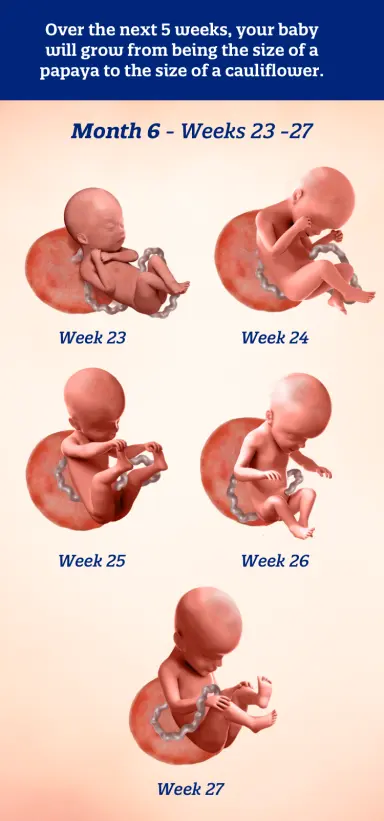
At 6 months pregnant, your fetus is going through a growth spurt. Your baby’s lungs are formed but still developing, their brain is gaining weight, and fat reserves are growing.
Those little kicks you may have started to feel last month are not so little any more; they may feel quite strong now, accompanied by jabs and punches. And while your nugget is now about the size of a papaya, they still have wiggle room in the womb.
Pregnancy Checklist for Month 6
- Take a glucose screening test. This routine test is performed during pregnancy and checks your blood glucose level for indications of gestational diabetes.
- Begin baby-proofing your home and decorating the nursery while you may have some extra energy.
- Create a birth plan that shares your labor delivery preferences with doctors, family members, and friends.
- Treat yourself to some cute maternity clothes.
- Take a babymoon. Generally speaking, as long as you don’t have complications, now may be a good time to fit in some pre-baby travel since some unpleasant first-trimester issues, such as nausea, may be in the past. Talk to your doctor before traveling, and be sure to stretch frequently and drink plenty of water if you’ll be sitting for long periods.
Frequently Asked Questions About the Sixth Month of Pregnancy
How many weeks is 6 months pregnant?
6 months pregnant is 24 weeks pregnant. The sixth month of pregnancy spans approximately weeks 21 through 24.
How could your baby be moving during the sixth month of pregnancy?
Your baby’s movements may have felt like flutters last month, but now you may be feeling full-blown kicks, which may grow in intensity until the day you meet your sweet pea. Your baby will also be turning from side to side in the womb.
Should you monitor your baby's kicks?
Your doctor may recommend keeping track of your baby’s movements to help monitor your little one’s health, size, and strength. Reach out to your healthcare provider for additional guidance.
Is there a 6-months pregnant ultrasound?
If you didn’t have a second-trimester ultrasound, also called an anatomy scan, last month, your doctor will likely perform one now. This screening scan examines your baby’s physical development and organs in detail, from bone growth to heart rate.